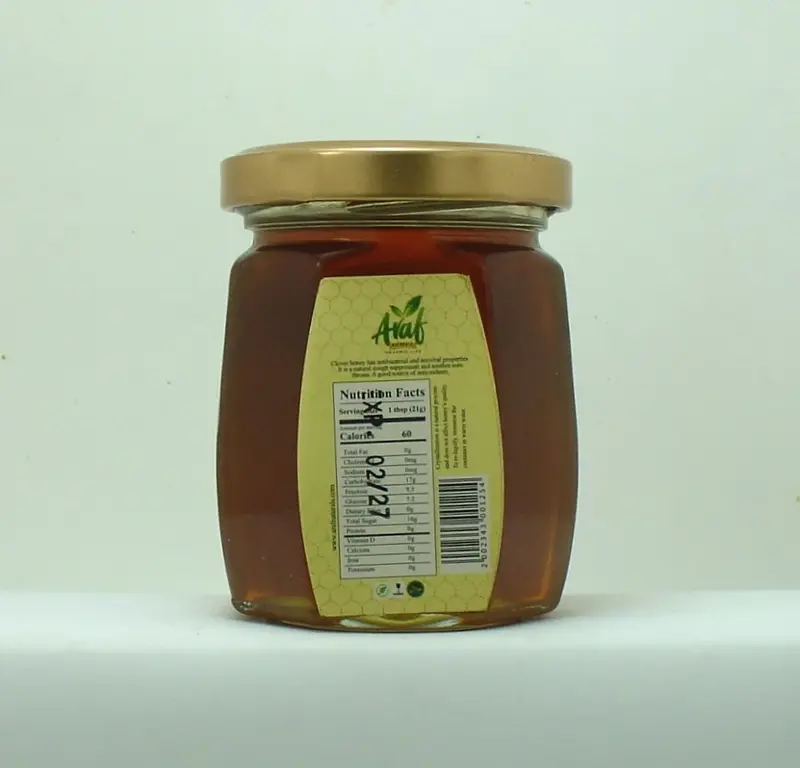
Raw, unfiltered honey: what the label really means
“Raw”, “natural” and “pure” get printed on almost every honey jar. Here's what those words actually mean, why heat matters, and how to tell real honey from a blend.

Almost every jar of honey says “natural” or “pure”. Neither word is regulated, so neither tells you much. The word that matters is raw — and it's worth understanding before you pay more for it.
What “raw” actually means
Raw honey isn't heated above hive temperature, and it isn't finely filtered. Most commercial honey is pasteurised — heated to around 70 °C — so it pours clear and takes longer to set on the shelf. That heat also removes much of the aroma, along with some of the enzymes and pollen that make honey more than just sugar.
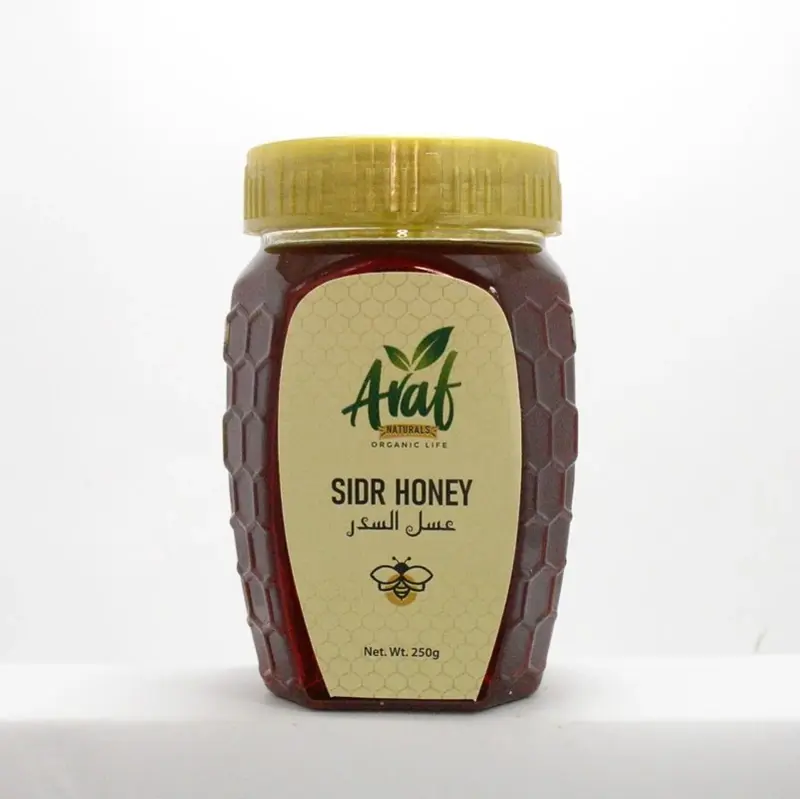
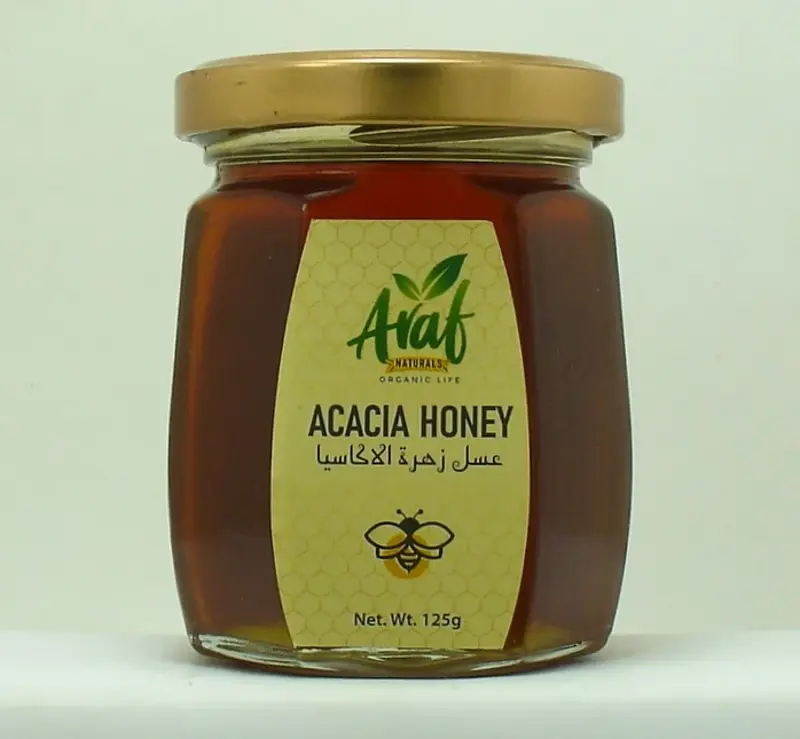
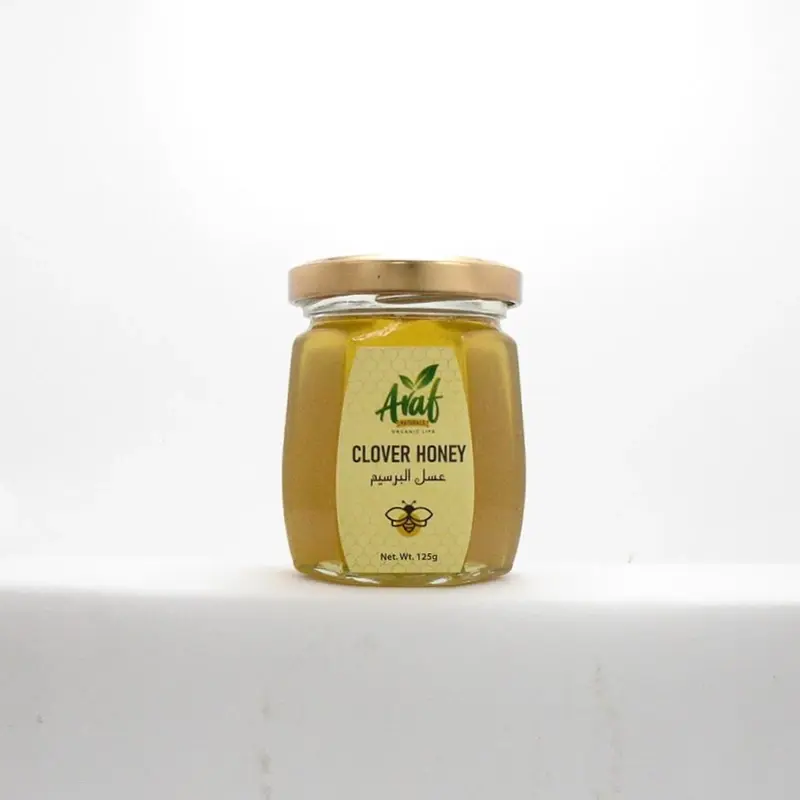
Raw honey is still strained to take out wax and bits, but the pollen stays. That pollen is how a lab can confirm the flower source — Sidr, Acacia or Clover — so “raw” and “traceable” usually go together.
Why honey crystallises (and why it's a good sign)
If your honey turns thick, grainy or solid, nothing is wrong. It's one of the clearest signs the honey hasn't been over-processed. How fast it sets depends on the honey's own sugar balance, so some set in weeks and others stay runny for a year. To make it liquid again, stand the jar in warm — not boiling — water. Never microwave it. There's more in how to store honey.
How to read a honey jar
- A named flower source (Sidr, Acacia, Clover) beats a plain “honey”.
- Raw, unheated or unpasteurised on the label — not just “natural”.
- It crystallises. A jar that stays perfectly clear for years has usually been heated.
- A fair price. Real single-source honey costs more than a supermarket blend, and for good reason.
Different types really do taste different: Sidr is dark and malty, Acacia light and floral, Clover mild and everyday. The best way to learn is to taste them side by side — start with our guide to Sidr honey and guide to Acacia honey.
Frequently asked questions
Is raw honey better than regular processed honey?
Raw, unfiltered honey skips the high-heat pasteurisation used on most commercial honey, so it keeps more of its natural pollen, enzymes and aroma. It's less about being better at everything and more about staying closer to how it left the hive.
Does raw honey go off?
Stored well — sealed, cool and dry — honey keeps almost indefinitely, because its low moisture and acidity resist spoilage. It may darken or crystallise over time, but that's a change in texture and colour, not spoilage.
Is crystallised honey still good to use?
Yes. Crystallising is natural, and it's often a sign the honey hasn't been heavily processed. Stand the jar in warm (not boiling) water to make it liquid again, and never microwave it.