Ghee vs butter: what's the difference?
Ghee is made from butter, but the two behave very differently in the pan and on the shelf. Here's how they compare on smoke point, flavour, shelf life and when to use each.
Ghee starts life as butter, so it's fair to ask why anyone keeps both. The answer is that taking out butter's water and milk solids changes how it cooks, keeps and tastes — enough that each earns its own place.
They start the same, then split
Butter is about 80% fat, plus water and milk solids (proteins and sugars). To make ghee, butter is simmered until the water cooks off and those milk solids separate and are removed, leaving almost pure butterfat. Traditional desi ghee often starts from cultured cream, which is where its deep, nutty smell comes from — more on that in why desi ghee belongs in a modern kitchen.
Smoke point: ghee wins for heat
The milk solids in butter are what brown and then burn at medium heat. With them gone, ghee has a much higher smoke point, so it's the better choice for frying, tempering (tarka) and roasting. Butter is lovely for gentle cooking and finishing, but it burns if you push it too hard.
Shelf life: ghee keeps, butter spoils
Water and milk solids are also what make butter go rancid, which is why butter lives in the fridge. Ghee, being almost pure fat, keeps for months in a cool, dark cupboard — as long as you always use a clean, dry spoon.
Flavour and texture
Butter is creamy, mild and spreadable. Ghee is richer, nuttier and more concentrated, so a little goes further. Ghee is also usually free of lactose and casein, because the milk solids are removed, which some people find easier to digest — though it's still a dairy fat.
When to reach for which
- Use ghee for frying, tempering dal, starting a biryani, roasting vegetables, or finishing rice and roti.
- Use butter for spreading, laminated baking, and gentle sauces where its water and creaminess matter.
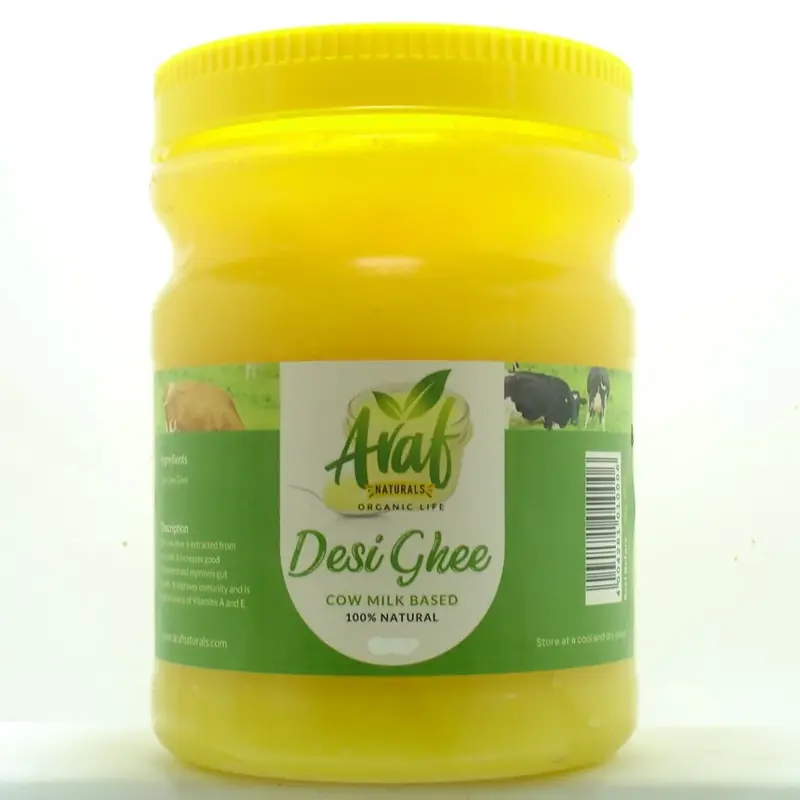
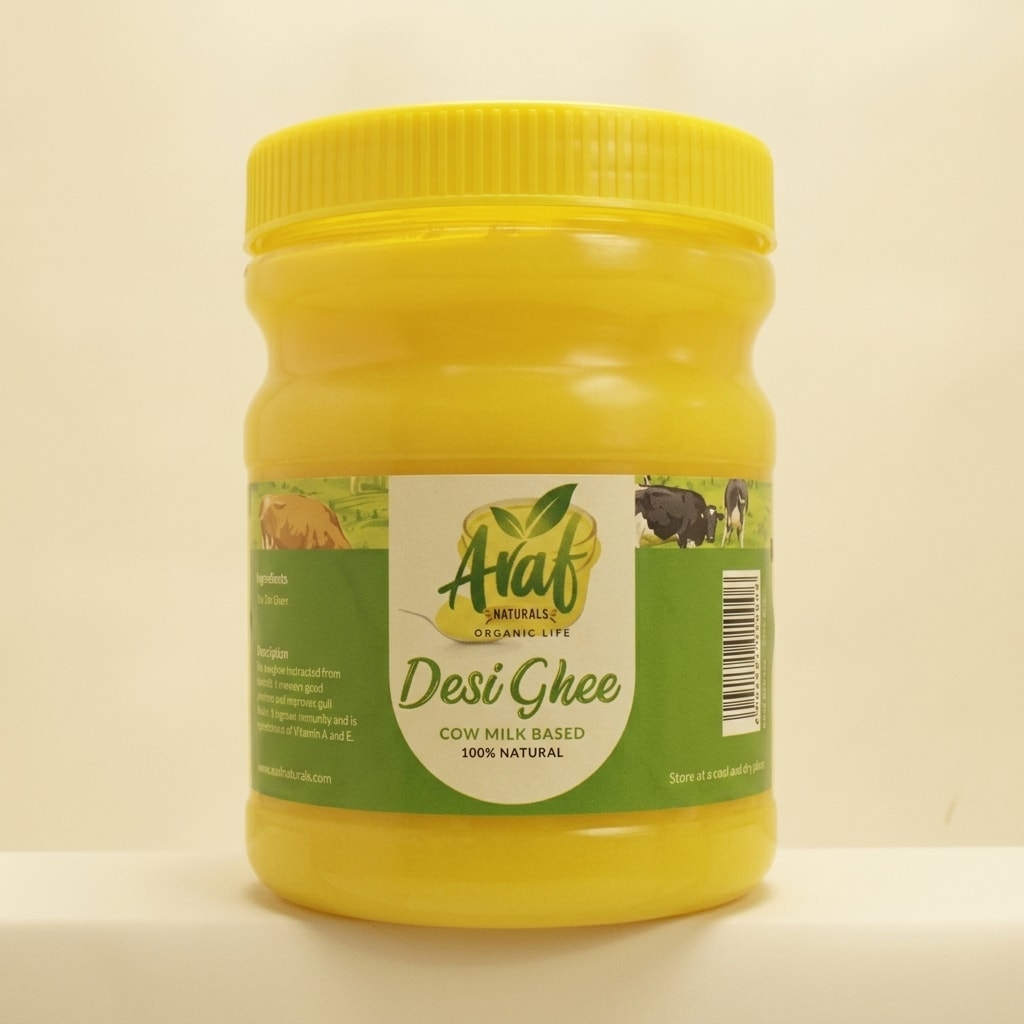
Neither is a health food — both are rich fats, best used with a light hand. But for high-heat desi cooking, ghee is the more practical, longer-lasting choice. Ours is a slow-churned cow-milk desi ghee with a single ingredient.
Frequently asked questions
Is ghee healthier than butter?
They're both concentrated dairy fats and are similar in calories, so neither is a health food to use freely. Ghee has the milk solids and water removed, which gives it a higher smoke point and makes it shelf-stable and usually free of lactose and casein — useful if those bother you — but it's still a fat to use in moderation.
Can I use ghee and butter interchangeably?
Often, yes, but adjust for the differences. Ghee is pure fat, so in baking it lacks the small amount of water butter adds; for frying and high heat, ghee is the better swap because it won't burn as easily. For spreading and delicate baking, butter's texture is hard to beat.
Why can ghee sit out of the fridge but butter can't for long?
Butter still contains water and milk solids, which spoil. Removing both is exactly what turns butter into ghee, leaving almost pure butterfat that resists spoilage and keeps well in a cool cupboard.