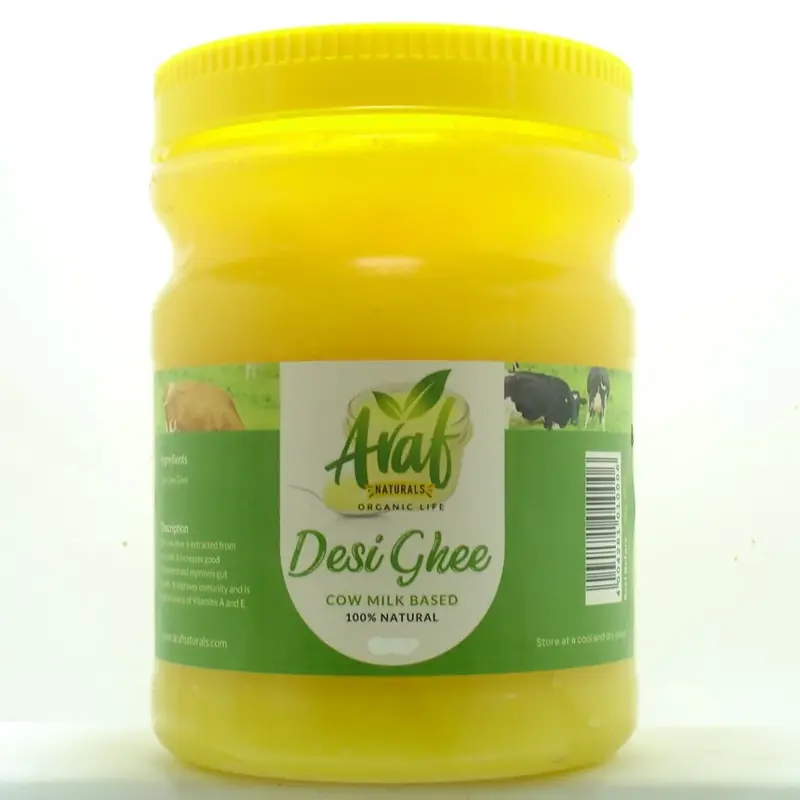
Why desi ghee belongs in a modern kitchen
Long dismissed, now back in favour — the case for slow-churned, cow-milk desi ghee, how to cook with it, and why its high smoke point matters.
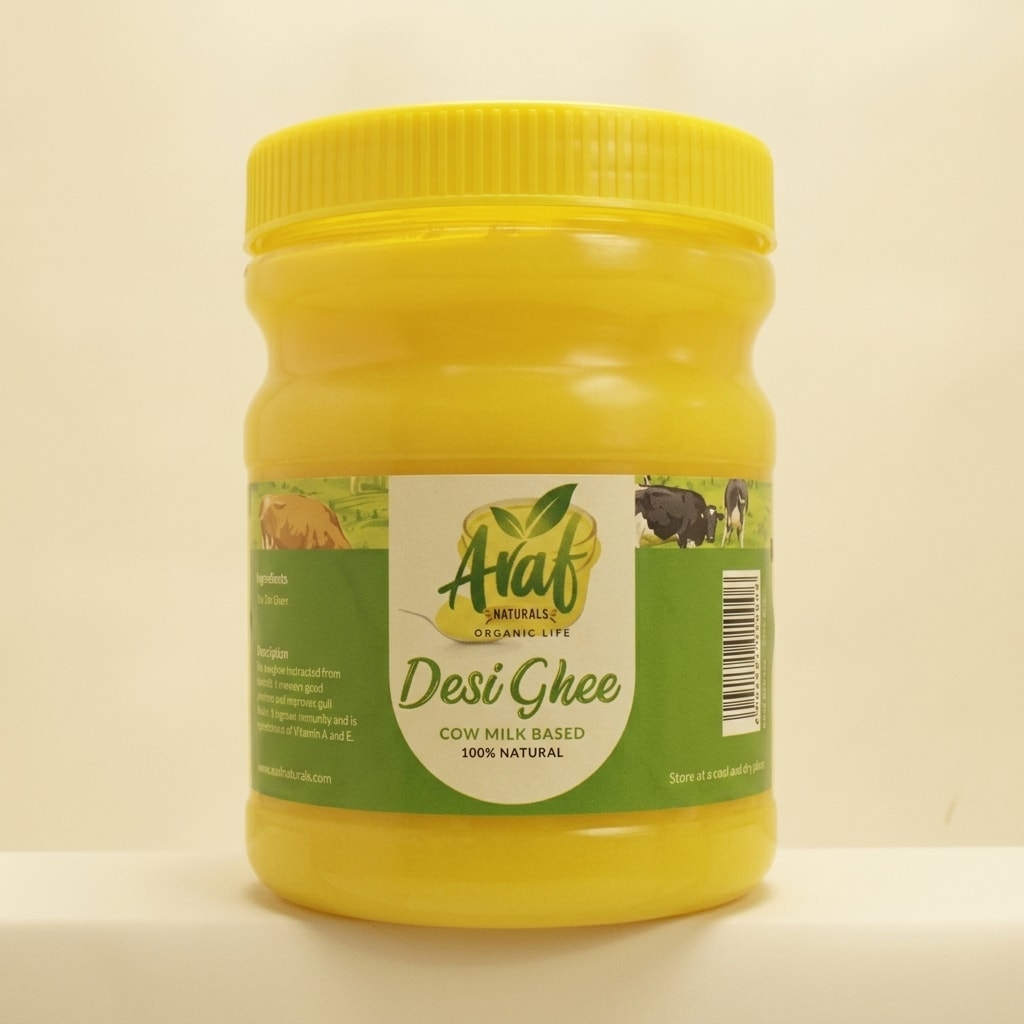
Ghee went out of fashion for a couple of decades and has quietly come back to serious kitchens. The reasons are practical, not nostalgic.
What ghee is
Ghee is butter that's been simmered until the water cooks off and the milk solids separate and are removed, leaving almost pure butterfat. Traditional desi ghee is often made from cultured cream, which gives it the deep, nutty smell that plain clarified butter lacks. We compare the two in ghee vs butter.
Why cooks like it
- High smoke point: with the milk solids gone, ghee takes more heat than butter before it burns — handy for frying, tempering and roasting.
- Keeps well: with the water and solids removed, ghee is stable in a cool cupboard, as long as you use a clean, dry spoon.
- Flavour: a spoonful finishes dal, rice and roti with a richness oil can't give.
How to judge a good ghee
Good cow-milk ghee is golden, grainy when set, and smells clearly nutty. It should list one ingredient — milk fat — and nothing else. Like honey, its texture changes with the weather: it turns liquid in summer and sets grainy in winter, and both are normal.
Use it where its flavour earns its place — the tarka on a dal, the first layer in a biryani pot, a slick over hot roti — rather than as a plain frying oil, and a little goes a long way. Our cow-milk desi ghee is slow-churned and single-ingredient.
Frequently asked questions
Does desi ghee need to be refrigerated?
No. Because the water and milk solids are removed, ghee keeps well in a cool, dark cupboard if you always use a clean, dry spoon. Refrigeration is optional and simply makes it firmer.
Why does my ghee go grainy or set solid in winter?
That's normal. Like honey, ghee changes texture with temperature — it turns liquid in summer heat and sets grainy and pale when it's cold. Both are signs of natural milk fat, not a fault.