Gur vs sugar: an honest comparison
Gur (jaggery) is often sold as a healthy alternative to white sugar. Here's what's genuinely different — nutrition, flavour and cooking — and where the marketing goes too far.

Gur — jaggery — is one of the most common “natural alternative to sugar” claims you'll see. Some of it is fair; some is overstated. Here's the honest version.
How they're made
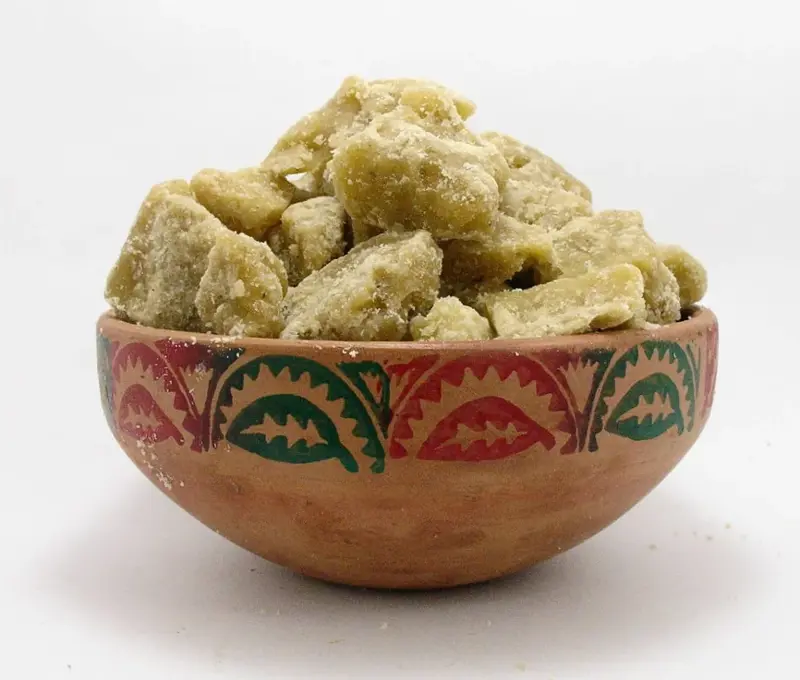
White sugar is sugarcane juice refined until only sugar crystals are left — everything else is stripped out. Gur is the same juice boiled down and set while it still holds its molasses and trace minerals. That one difference — refined versus unrefined — is behind every real difference between them.
Nutrition: a real but small difference
Because it keeps its molasses, gur holds small amounts of minerals like iron, along with a deeper flavour. That's a genuine plus over white sugar's empty sweetness. But keep it in proportion: gur is still mostly sugar, the mineral amounts are small next to how much you'd sensibly eat, and it gives similar calories and a similar effect on blood sugar. It's less refined, not low in sugar.
Where the marketing goes too far
Claims that gur “detoxes”, “burns fat” or is safe for people avoiding sugar don't hold up — it's still sugar. If you're watching your blood sugar or weight, the real move is to use less sweetener overall, whatever kind. Choosing gur is about flavour and a slightly better nutrition profile, not a health treatment.
Flavour and cooking
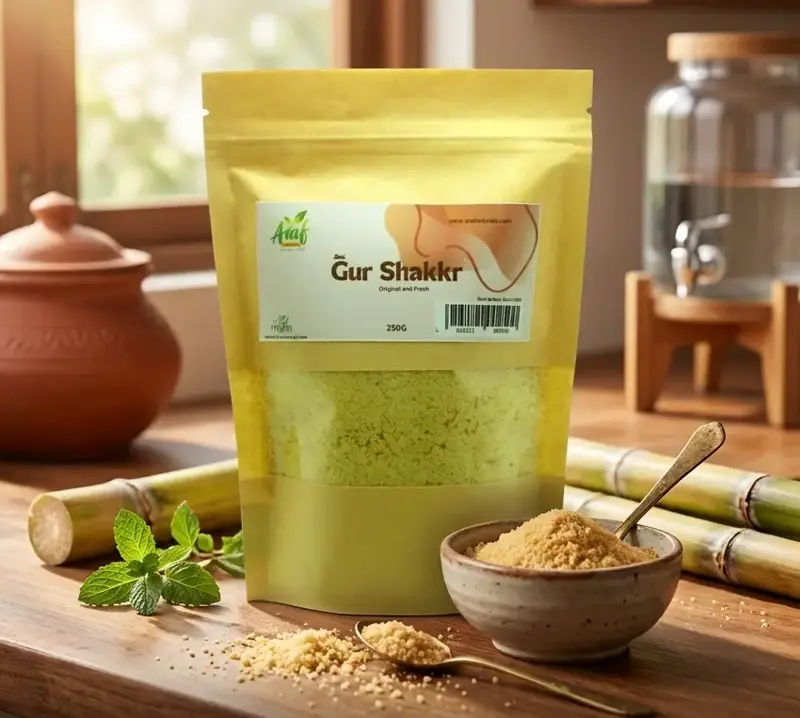
This is where gur genuinely wins. Its molasses depth is traditional and delicious in halwa, kheer, gur wali roti and winter sweets, and it pairs beautifully with sesame, peanuts and ghee. For everyday stirring into drinks, the powdered form — shakkar — dissolves more easily, as we cover in gur, shakkar & brown sugar.
The honest takeaway
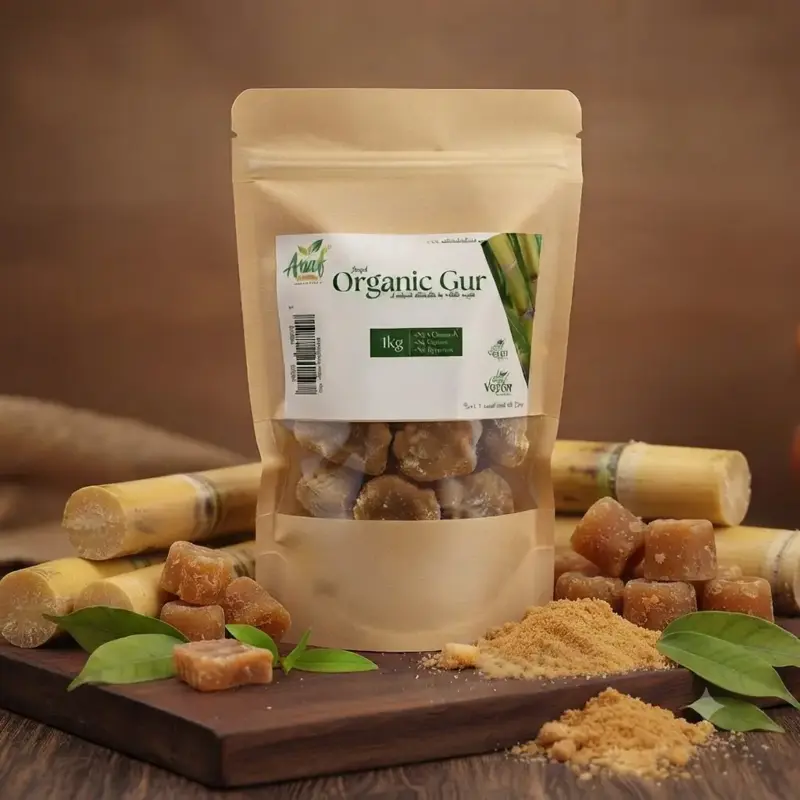
Gur is a better-quality sweetener than white sugar — more flavour, a little more nutrition, less processing. It isn't a health food, and swapping it in won't undo eating a lot of sugar overall. Use it where its flavour earns its place, and use less. Start with our organic gur or the easier-to-measure gur shakkar.
Frequently asked questions
Is gur better for you than white sugar?
Gur is less processed and keeps small amounts of minerals and molasses that refining strips out, and it has more flavour. But it's still largely sugar and raises blood sugar in much the same way, so it's best seen as a less-refined, more flavourful sweetener — not a free pass to use more.
Does gur have a lower glycemic impact than sugar?
The difference is small at most. Gur is still mostly sucrose, so it affects blood sugar in a broadly similar way. Anyone managing blood sugar should treat gur like sugar and use it sparingly.
Can I replace sugar with gur in any recipe?
In many, yes, but expect changes. Gur brings colour, moisture and a molasses flavour, so it shines in halwa, kheer and winter sweets. In delicate bakes or drinks where you want a clean sweetness, its flavour and colour may not suit.